
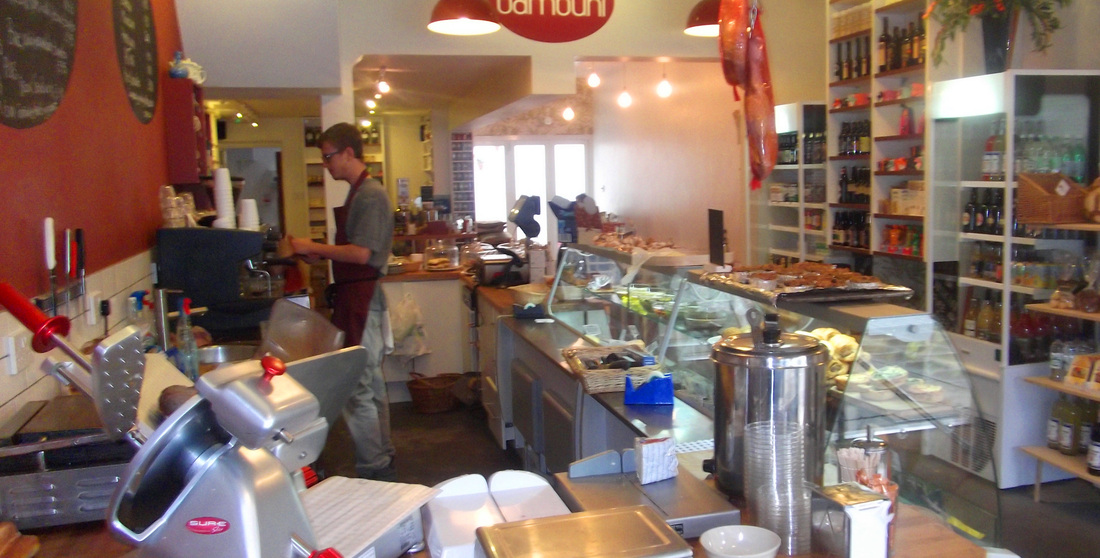
 It takes a brave, some might say foolhardy, some might say insane, soul to start a business in the current financial climate, so we denizens of SE15 should stand as one and applaud the bravery/foolhardiness/insanity (delete as appropriate) of Huey, only begetter of the Bambuni delicatessen and coffee shop, which first opened its doors a year ago yesterday.
The refurbishment of the premises took months, and most of the work was carried out by Huey himself. It was a labour of love and you can tell by the finished space how much thought and care have gone into it; free wi-fi, well duh!, but also a power outlet at each table; great music, yes, but via a speaker system covering every area; a projector hung from the ceiling for film nights; plain white walls, polished wood and spot-lighting making it a delightful room to spend time in, over a flat white and a toasted sandwich. Of course, none of that would matter a jot if even more thought hadn't been put into what is on offer. But there's some great stuff here: The coffee served is from Volcano and is also available to buy in 250g bags (they'll happily grind the beans for you if you wish). In addition to a fine selection of charcuterie and cheeses, Huey sells fantastic bacon and sausages from Nathan Mills. Bread is from Brick House, Levain (formerly Born and Bread) and Boulangerie Jade. Pork pies are from Bray's Cottage. There are shelves full of dried pastas from Bartolini and De Cecco, jams, pickles, Spanish beans and pulses, goose fat, duck confits and cassoulets, Italian tomatoes from Mutti, teas from Pukka and much more. There's a great selection of beers (Red Willow, The Kernel, Cropton's, Hard Knott and Buxton's) and wines. And, marvellous to behold, there are two barrels of wine (a white and a red - currently Italian) from which customers can refill their stoppered Bambuni bottles. A bottle costs £2.50 and the wine is £5.50 for 750ml. A similar refill system operates for olive and rapeseed oils. The oils cost between £3-£5 for 500ml and the refill bottles £2 each. Italian '00', strong bread, self-raising and spelt flours are available to buy by weight as is rice (paella, basmati, arborio), quinoa and oats. Joy of joys, there's a freezer cabinet chock full of ice cream from The Ice Cream Union - including cornflake, hazelnut and lemon pie flavours. There is always new stock from new suppliers being added - Huey has been stocking everything you need to make sushi (inlcuding mats) for a while now, but has just added a range of Mexican moles, re-fried beans, tortillas etc. And it's well worth signing up to the newsletter to keep up to date with regular evening activities - supperclub pop-ups, film nights, sushi making, late evening bar nights etc. With all of that available, let me ask you a question. If you live in the area and haven't been to Bambuni to, at the very least, check it out, why on Earth not? Happy Birthday Bambuni!
8 Comments
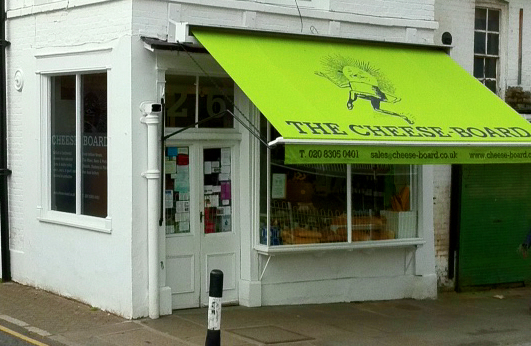 And so once more unto Royal Hill in Greenwich, land of twin-sets, labradors and Money Box on the radio, for my monthly visit to The Cheeseboard. Or almost monthly: because I disappear sometimes, I'd fallen a month behind in this project (to choose a cheeseboard, with three cheeses each, always under £7.50, for every month of the year). So, in order to get back on track, I thought that on this visit we'd choose two. There was another reason: opting for three different wedges for under £7.50 meant that I couldn't afford to include those which are only sold whole. So I intended that one board would consist of just one splendiferous, fuck-me-that's-good cheese.
But, as it turned out, a whole Carboncino, the star of this month, costs £4.25. So with the addition of small slices from two other cheeses the total came to £7.54. And we're not going to quibble about going four pence over, are we? Especially as the other selection cost me only £6.06. Actually, because I've signed up to the Cheeseboard's newsletter, I got a discount of 15%, so the grand total for all six cheeses came to £11.56. The tasting notes in each of these posts have, up until now, been written by Robbyn, the shop's manager. However, she seemed to think that it was perfectly O.K. to flit off to the good ol' U.S. of Stateside for a family gathering without first checking if I was due for a visit. Luckily, the damage any such flagrant and haughty disregard for customer satisfaction might have caused was more than offset by the help and advice proffered by her colleague Lucy. These are her notes: 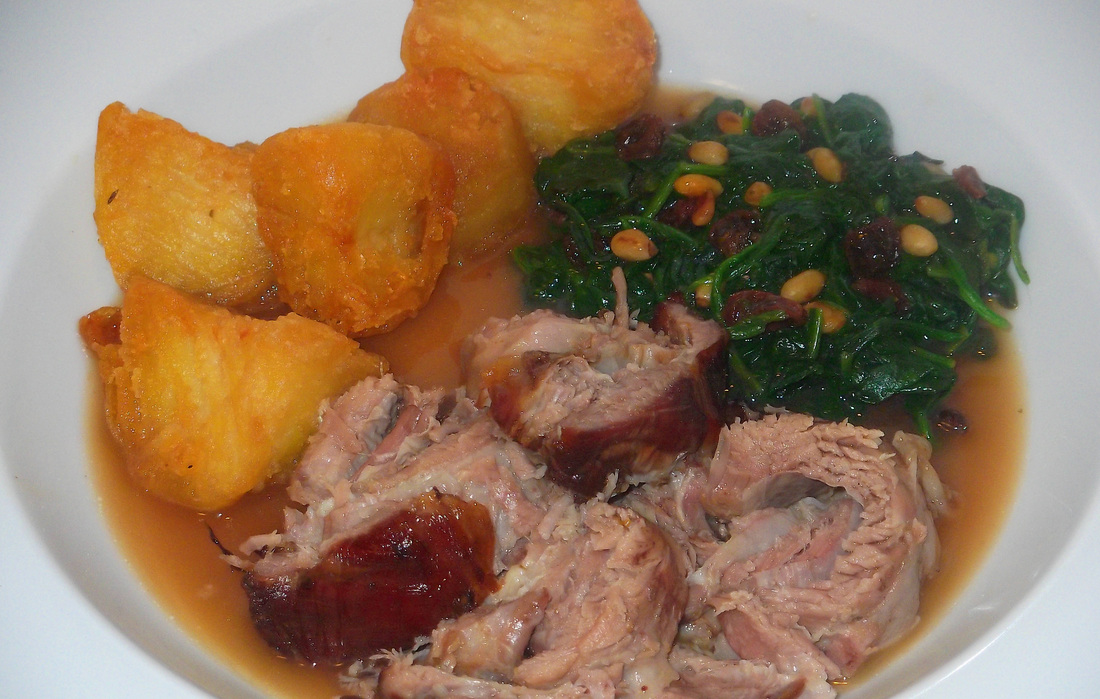 If you think about it, breast of lamb should really be ticking all the boxes for the solitary skint foodie. It's cheap - cheaper (in Asda at least) even than our beloved pork belly; it's most often packaged as a 2-3 portion rolled and boneless joint, just right for a Sunday lunch plus leftovers; and it comes with the promise of sweet and tender meat.
But on the few occasions when I've been tempted to cook it, what I've found is that the box it most vehemently ticks, with a mahoosive, fuck-off, indelible marker pen, is the one marked 'Vast Amounts Of Unappetising Fat'. Now fat can be a glorious thing, particularly when we're talking pork (see the previous post) and beef (although the government have been mysteriously silent on my proposal to provide free bread and dripping to all school children). But, in my opinion, a little lamb fat goes a long way. Now, The Ginger Pig, butchers of distinction, have, with ineffable kindness, taken to gifting me an occasional package of 'mystery meat' - and this month's generous offering was two bone-in breasts of lamb. Time then, finally, to find a recipe or two which successfully dealt with the cut's unwanted adiposity. Actually, before that, why is it called 'breast' of lamb anyway? As you can see from the diagram below (which I took from this page of the Ginger Pig's website without permission and with a cavalier disregard for the copyright laws, because that's how this samizdat, 'Fight The Power' gastro-rebel rolls, motherfuckers*), it's really the belly. |

SHORTLISTED FOR FOOD BLOG OF THE YEAR 2014
follow/subscribe:
   blog archives:
November 2014
|
