
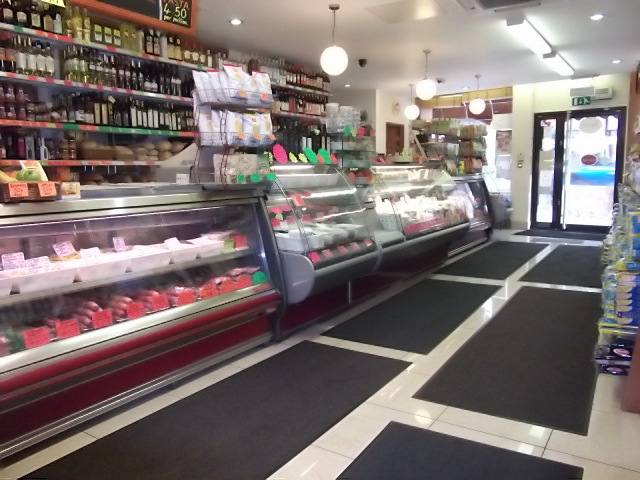
 ‘The first thing you noticed as you went into Gazzano's…was the smell, perfume rather – the sweet savour of cured pork overlaid by the clean, lactic tang of cheese and the heady blast of coffee…Gazzano's, founded by Joe's family a century ago, was a model of its kind, shelves piled with rustling bags of pasta asciutta, dried pasta, ranks of bottles and tins of olive oil and carefully selected wines. It cheered you up just going in there, browsing over the display cabinet of salamis speckled with fat and peppercorns, legs of prosciutto or rolls of porchetta ready to be carved, and mortadellas as round as cannon barrels. There was an array of cheeses, laid out with artful casualness, and neat tumps of sausages, glistening and tied to each other with string. Around the corner were the fresh pastas, raviolis with two or three different fillings (the pumpkin was a particular favourite of mine) and agnolotti, tagliatelle.'
That description, from Matthew Fort's tender 2010 obituary of Joe Gazzano Sr ('a modest, kindly man') is of the shop before the 2004 development of the site; but though the layout has changed, the exalting delight you feel on entering this legendary salumeria remains exactly the same. Not that the utilitarian architecture of the building (see below) gives much hint of the wonders that lie within. You could easily miss it as you stare out of the window of the 63 bus (and the 63 bus it will be, because that's the only one that passes here; how fortunate then that its route takes it along Rye Lane, Peckham, meaning I've a journey time of no more than 30 minutes to get here). But pass under that awning and you step into 'Italy in a shop'.
18 Comments
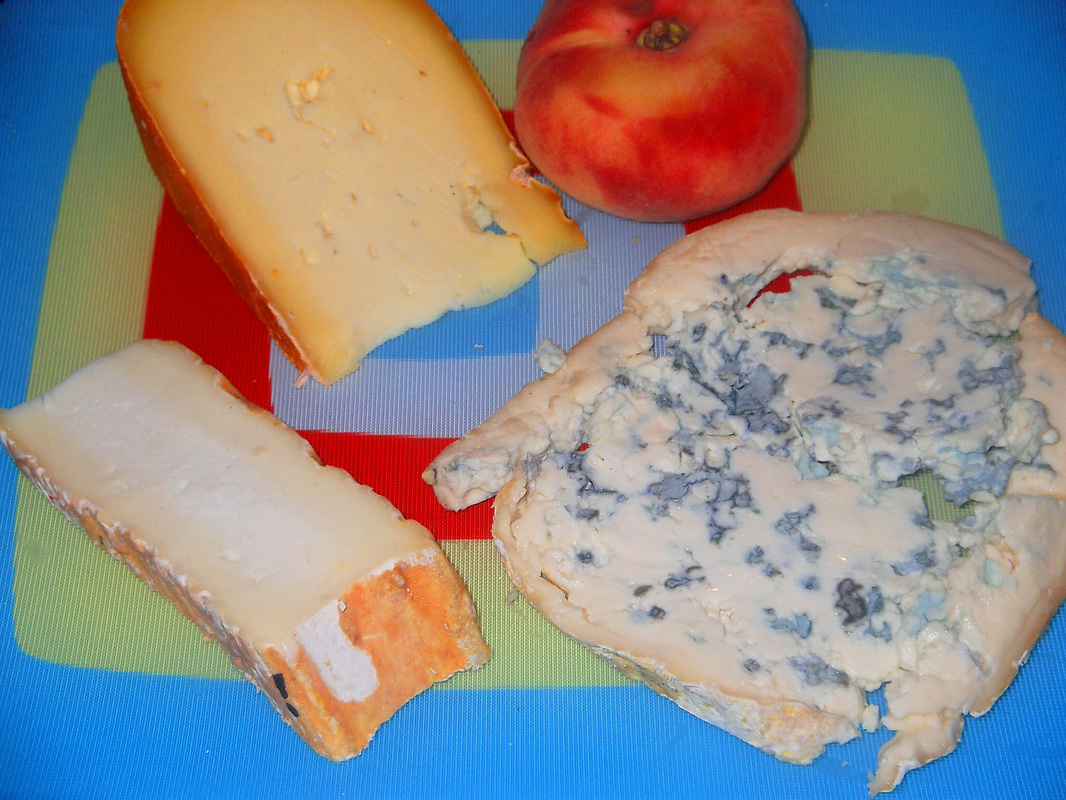
Left: Cardo (£2.10/100g); Top: Mahon (£2.50/100g); Right: Fourme d'Ambert (£1.45/100g)
The French blue was the defending mid-fielder of this month's selection from The Cheeseboard, playing a supporting role to the twin strikers of the Cardo (aromatic, slightly sweet) and the Mahon (which reminded me a little, taste-wise, of Gorwydd caerphilly). Robbyn was rather unexcited by my choosing the fourmme d'ambert; but while I did so primarily for reasons of cost (keeping the selection well under our £7.50 limit) I also like it. It's not that challenging or complex, but it's a decent hunk of cheese nonetheless - and this one from the Cheeseboard is unpastuerised. The three pieces pictured above cost me £6.32. Here are Robbyn's notes: cardo Goat's milk Unpasteurised Cardo is handmade by Mary Holbrook on Sleight Farm in Somerset. It is a semi-soft washed-rind goat’s milk cheese that is washed in water (rather than brine) while it matures. She uses a vegetarian rennet made from cardoon stamens (from which it gets its name) which is related to the artichoke and is commonly used in Portuguese cheese-making. The rind adds savouriness to the delicate floral flavours of the pâte. This cheese is unusual in that it is truly a seasonal cheese, produced only between March and October, the natural kidding cycle for goats. mahon Cow's milk Unpasteurised Mahon is named after the capital of Menorca where it is made. The Tramuntana wind (known as the Tramontane in France) is the north wind that blows sea salt over the pastures that the cows eat from and lends a particularly salty characteristic to this cheese. During the cheese-making process, the curds are wrapped in a cloth square and the corners are tautly tied, which gives the cheese its signature shape of a fat cushion. It is then washed in brine and rubbed with olive oil and paprika. This gives it its beautiful colour and also contributes to its tangy, intense flavours. It is matured by Nicolas Cardona, one of only two Afinadores on the island of Menorca. He follows in the footsteps of his father and grandfather; his role is to select the cheeses and mature them - including brining and turning them by hand until they are perfect. fourme d'ambert Cow's milk Unpasteurised
Perfect for those who do not like blue, fourme d'ambert has converted many people who have never appreciated blue cheese. It is well-balanced: sharp and mellow at the same time, not salty, with a big perfume of fruit and wood. One of France's oldest cheeses, it received AOC status in 2002. It takes its name from the mould that is traditionally used to give it it’s cylindrical shape. Produced in the Monts de Forez of the Auvergne, this is milder than a Roquefort, without the peppery-ness of that cheese. 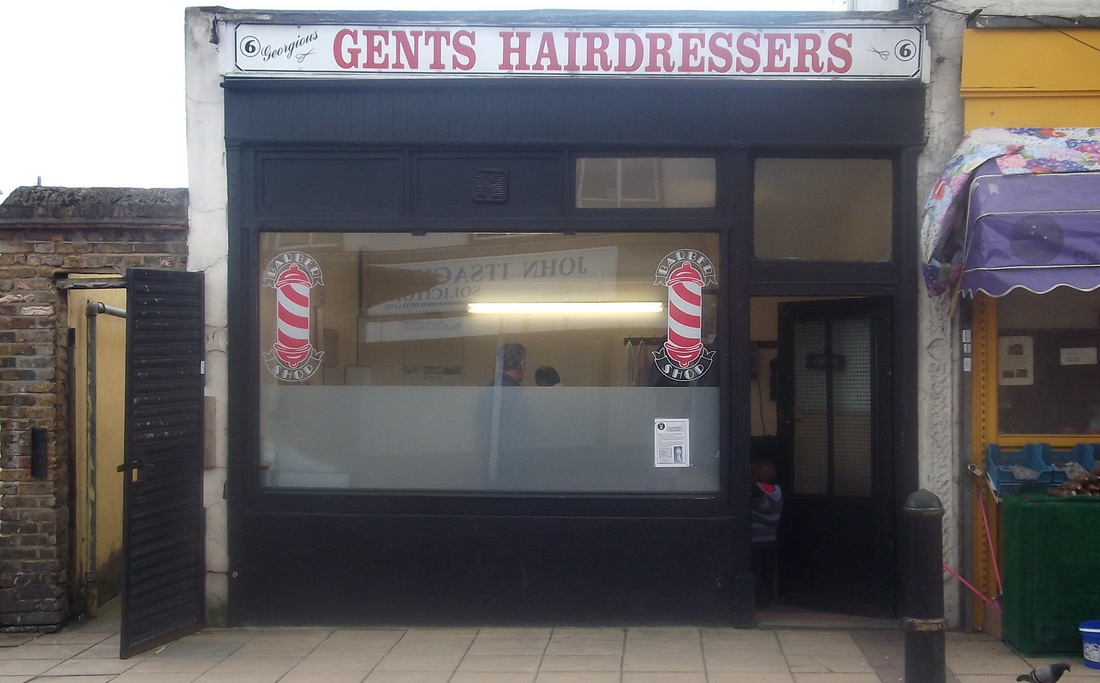 Georgiou's Barbers are located in a passageway just off Rye Lane, opposite Choumert Road. They're open from 6:30 in the morning and close at about 3:00 in the afternoon (closed Thursday and Sunday) In the past I've travelled to quite a few Greek islands; I just had a look at a list of them and I can recall seven, although there's probably a couple of others that I've forgotten about. I know I've visited Santorini so - Naxos and Paxos maybe? Anyway this was all very long ago and, memory shrouded by the mists of time, the forgetfulness is perhaps understandable. What isn't understandable is why the fuck I've never thought to make a Greek frappé at home before yesterday. Especially given that it's a piece of piss. This sorry state of affairs may well have continued indefinitely had I not decided to splash out on a haircut the other day (£6, eyebrow trim included) at Georgious Barbers. First opened in 1953, Steve and Andrew have been cutting hair here since 1965. We usually end up talking about food and Greek food in particular, as both are of Greek-Cypriot heritage. As I stepped out into the sweltering and humid sunshine, with images of island idylls swirling around the old, freshly cropped noggin, I suddenly thought: 'I could murder a frappé now'. Greek frappé, at its simplest, is Nescafé, chilled water and (usually) sugar, shaken or frothed and served cold in a long glass with ice cubes and a straw. It can also include milk (evaporated or fresh) if you like, and you can have it without sugar (sketo), medium sweet (metrio) or sweet (glyko). Legend has it that it was first created in 1957 at a trade fair in Thessaloniki, when a Nescafé representative, unable to find boiling water to make a coffee, improvised with cold water and a shaker. Over time it has become part of the culture of Greek café life. There's a scientific reason why you need spray-dried instant coffee to make a frappé - something to do with the density of proteins created in the process. These proteins act as a foaming agent during the initial phase of mixing, thereby producing a foam with something of the texture of the head on a pint of stout. For a true frappé you need Nescafé Classic I'm told, but you can't get that in the UK (or at least I've not been able to find it) so I've used Nescafé Original. I haven't yet been able to find out what, if any, difference there is between the two. You also, really, need a table outside a harbour café on a Greek island, a backgammon board and 3-5 hours to while away; but you can't have everything. Despite being a blindingly simple concoction, knocked out in seconds, there are forums online (of course there are) on which you can debate the merits of different methods, recipes, equipment, water etc. Here's the recipe I used: |

SHORTLISTED FOR FOOD BLOG OF THE YEAR 2014
follow/subscribe:
   blog archives:
November 2014
|
